On April 20, 2026, the academic seminar themed “Fintech Unlocked: The Future of Finance for Students” convened at Hall A2, Posts and Telecommunications Institute of Technology (PTIT), Ha Dong Campus, Hanoi. The event was graced by the presence of Assoc. Prof. Dr. Dang Thi Viet Duc, Dean of the Faculty of Finance and Accounting 1, alongside a substantial gathering of undergraduates passionate about the financial technology (FinTech) sector.
The seminar was structured around an assessment–training–reassessment pedagogical framework, purposefully designed to empower students to discern and evaluate shifts in their own cognitive perceptions following engagement with advanced, specialized knowledge.
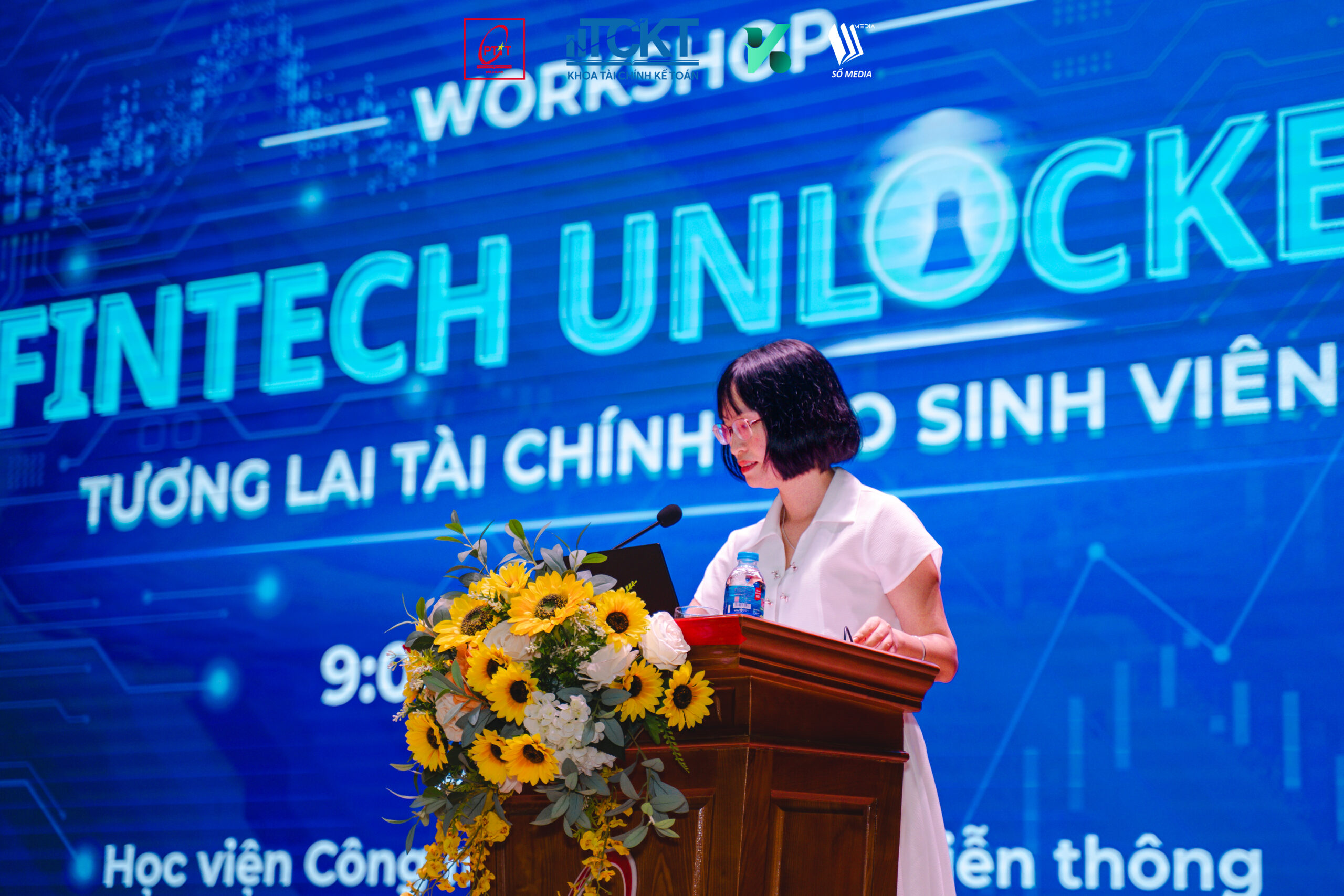
Delivering the opening address, Assoc. Prof. Dr. Dang Thi Viet Duc emphasized:
“We are living in an era where finance and technology have converged into an indivisible whole. With a single smartphone, you can execute payments, conduct investments, secure credit, and manage your personal wealth with unprecedented ease. Yet, this very ubiquity often fosters undisciplined consumption and elevates exposure to cybersecurity vulnerabilities. The underlying risk stems not from the technology itself, but from the manner in which we deploy it.
Therefore, the seminar ‘Fintech Unlocked: The Future of Finance for Students’ is architected not merely to demystify FinTech mechanisms, but critically, to empower you to decipher your own behavioral dynamics within the digital sphere. The modern labor market demands more than financial proficiency; it calls for visionary practitioners who grasp financial principles while commanding technological frontiers.”
Inaugurating the academic session, guest keynote speakers Dr. Dang Quan Tri and M.Sc. Huynh Bao Thach—distinguished faculty members from the Ho Chi Minh City University of Foreign Languages – Information Technology (HUFLIT)—administered a diagnostic baseline survey to assess the students’ preliminary competencies and foundational comprehension of the FinTech landscape.
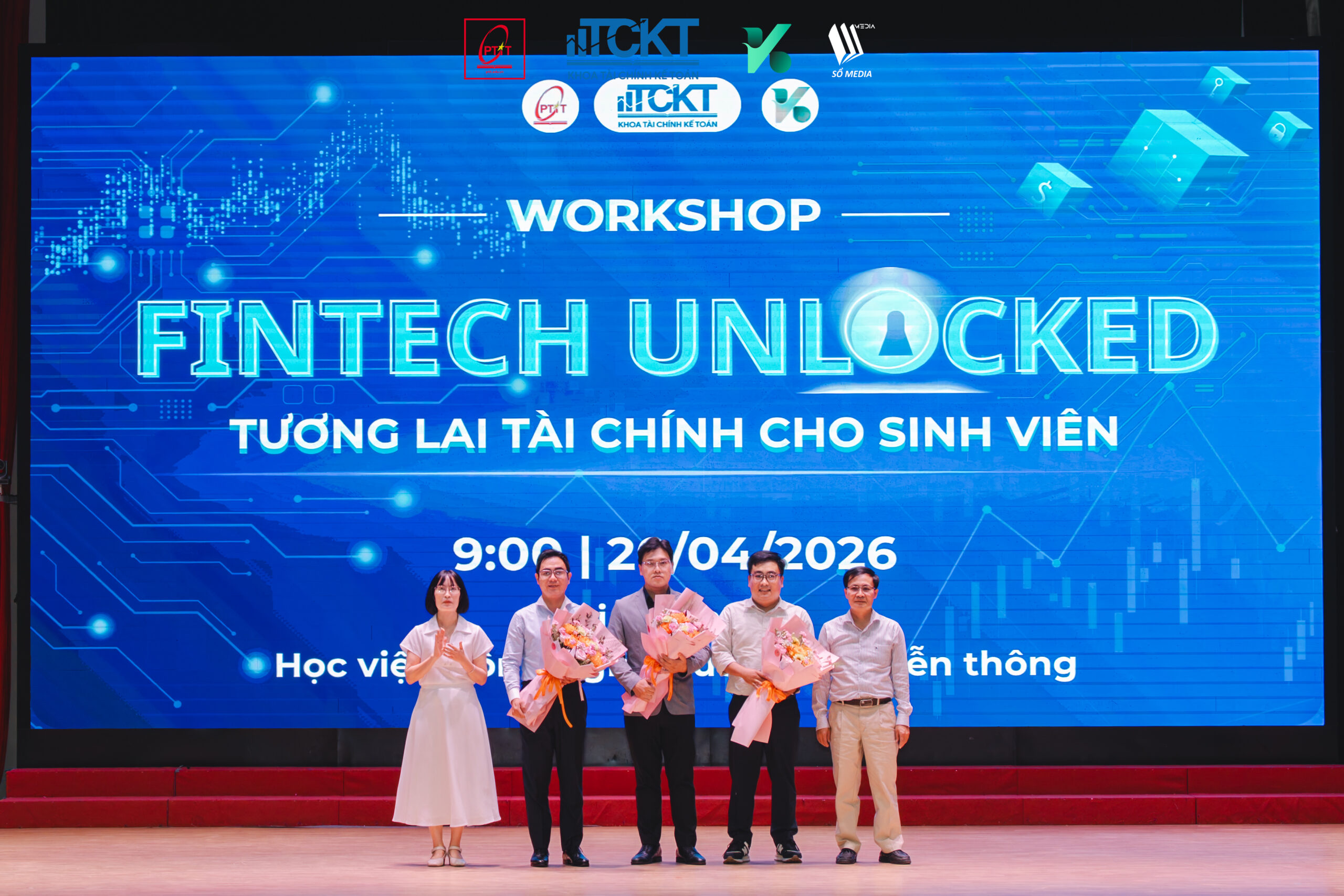
The survey findings indicated that a significant majority of participating undergraduates lacked a coherent comprehension of the discipline, particularly regarding systemic vulnerabilities and behavioral exposures inherent in digital financial services. This metric accurately captures the prevailing empirical reality: despite the exponential maturation of the FinTech ecosystem, it remains unfamiliar terrain for many students outside specialized cohorts.
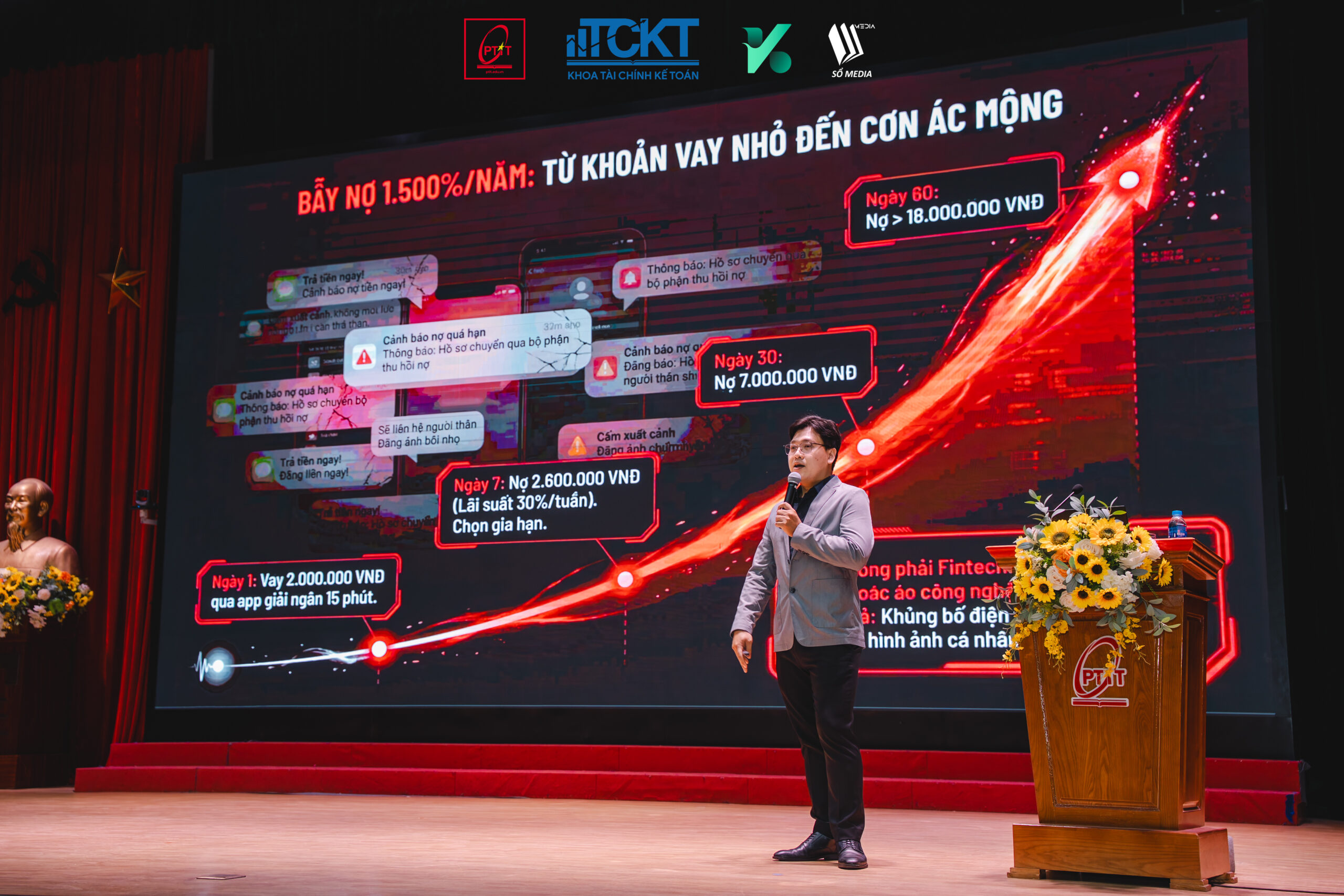
In the seminar’s plenary session, M.Sc. Dang Hoang Son—an industry practitioner with over a decade of empirical expertise across premier banking, capital markets, and securities institutions—delivered practical insights into widespread behavioral risks in FinTech consumption, including technological overreliance, deficient cybersecurity hygiene, and susceptibility to exploitation across digital interfaces. He unpacked the architectures of increasingly sophisticated digital financial fraud vectors, reaffirming the imperative to cultivate digital financial literacy, technical competencies, and proactive risk awareness across the student demographic.
Transcending mere risk admonition, M.Sc. Dang Hoang Son emphasized systemic mitigation frameworks anchored in targeted FinTech education and pedagogical intervention. Undergraduates were introduced to critical inquiry paradigms, empirical risk-detection methodologies, and strategic frameworks designed to govern digital financial instruments securely and effectively.
Following the training module, a post-intervention diagnostic assessment was administered to evaluate empirical shifts in student awareness. The comparative metrics revealed marked pedagogical progress: undergraduates acquired a more rigorous grasp of core FinTech mechanisms, demonstrated enhanced proficiency in detecting digital financial risk vectors, and exhibited proactive vigilance regarding cybersecurity and self-protection across digital platforms. This qualitative progression validated both the pedagogical efficacy of the symposium and the viability of interactive, practice-led FinTech curricula.
The seminar “Fintech Unlocked: The Future of Finance for Students” concluded with broad acclaim, reaffirmed by substantial student engagement and vibrant academic discourse throughout Hall A2. The student plenary addressed critical, high-impact inquiries to the keynote speakers, demonstrating serious intellectual curiosity that earned strong commendation from the guest specialists.
By operationalizing the “survey–instruct–reassess” framework, the initiative surpassed passive instructional delivery, empowering participants to observe and benchmark their individual intellectual growth—a crucial foundation for sustained academic progression and professional development within the digital finance domain.