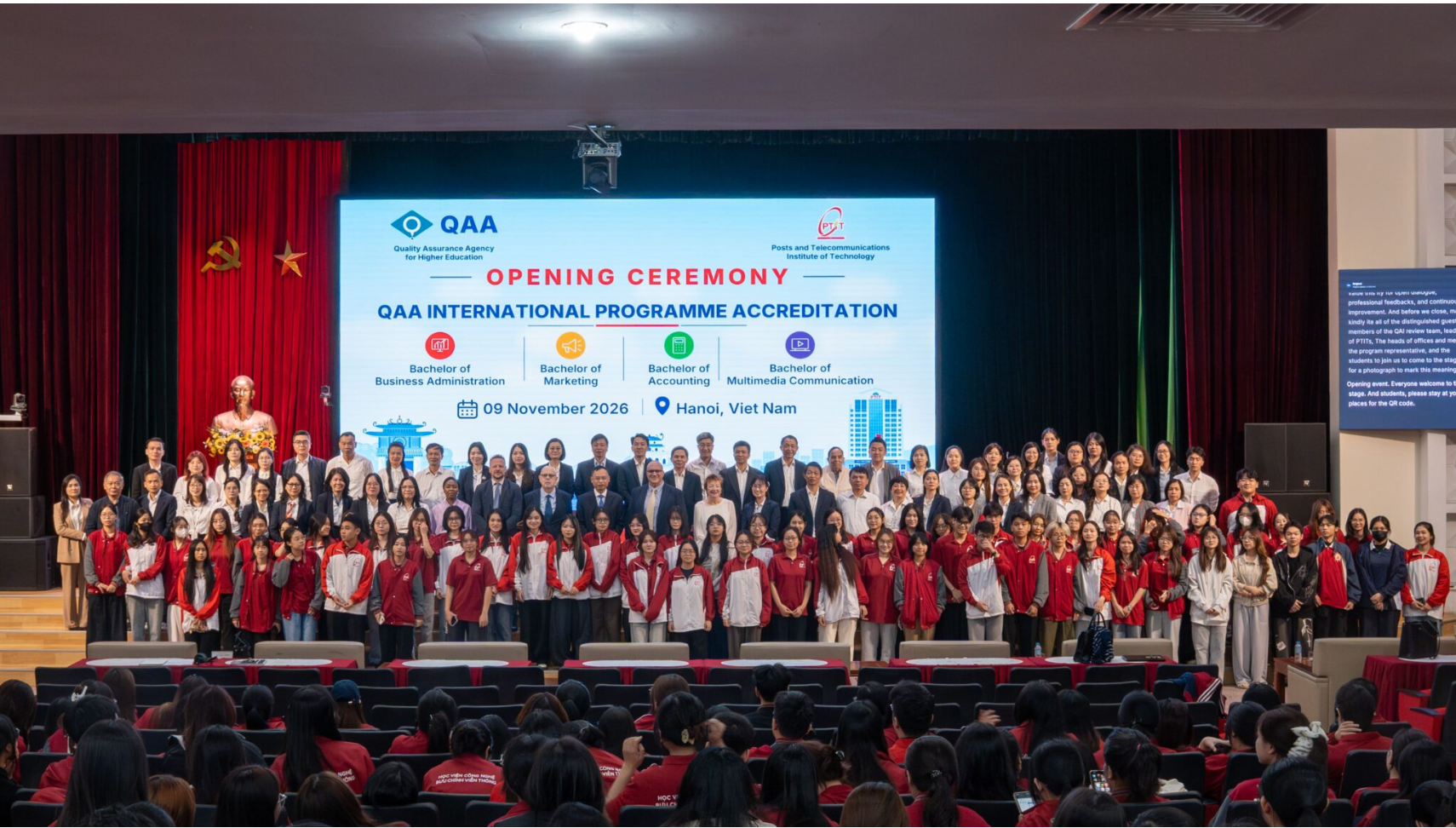
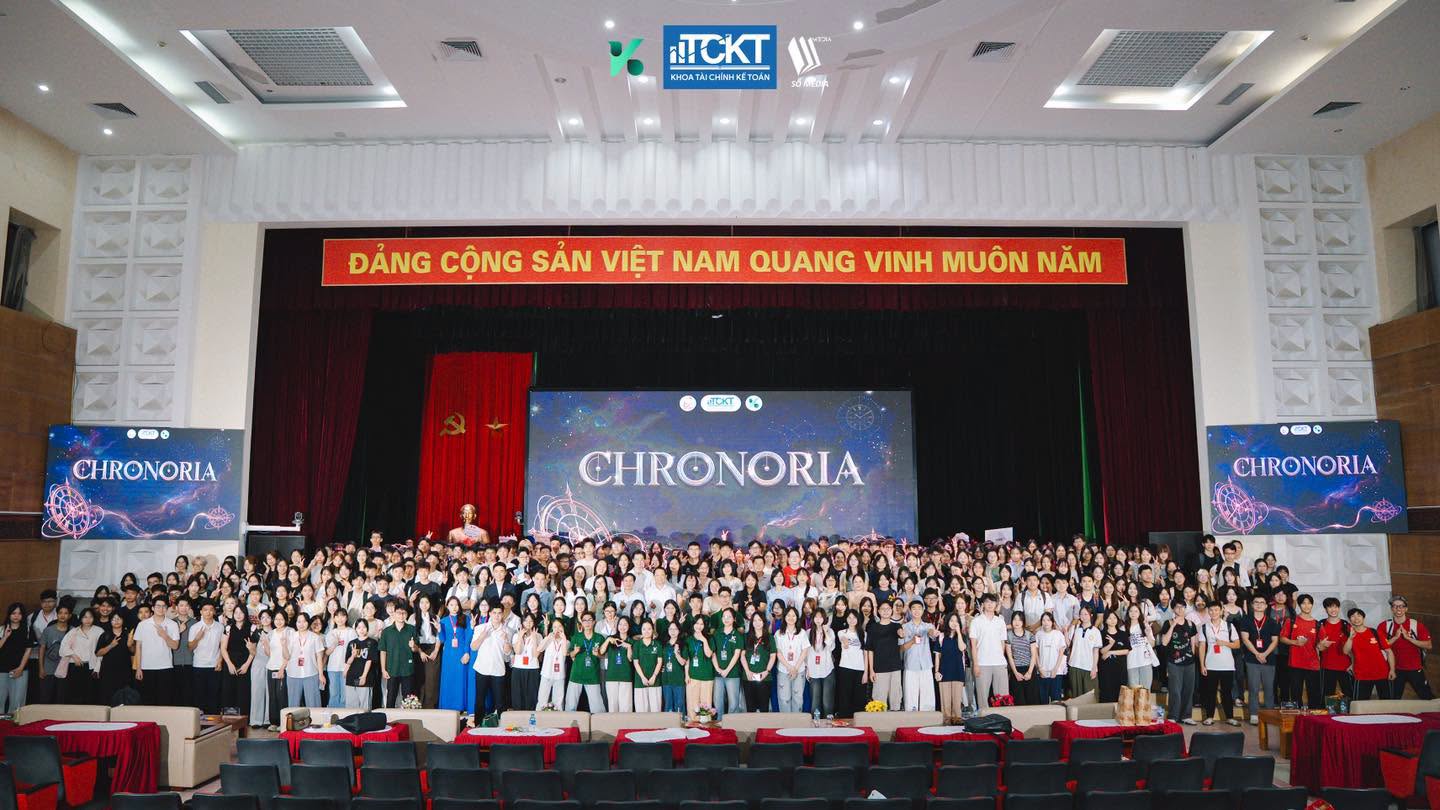
Aiming to improve training quality and strengthen international integration, the Faculty of Finance and Accounting 1 at the Posts and Telecommunications Institute of Technology (PTIT) is carrying out professional exchanges, in-house training and a review of its curriculum. These activities are part of its step-by-step preparation to have its Accounting program accredited internationally under the standards of the UK’s Quality Assurance Agency for Higher Education (QAA).
As higher education places growing emphasis on quality, transparency and global integration, program accreditation is not merely an assessment exercise. It also drives innovation in teaching methods, improvements in learning content and the development of students’ capabilities. This is especially true in accounting and auditing, where the professional environment is changing constantly under the influence of digital transformation, big data, artificial intelligence and evolving international professional standards.
In line with the Institute’s overall development strategy, the Department of Accounting and Auditing under the Faculty of Finance and Accounting 1 is gradually rolling out preparations for international accreditation of the Accounting program. The process offers an opportunity for a comprehensive review of the program’s training objectives, learning outcomes, structure, course content, teaching methods and assessment of student performance, with the aim of further improving the program’s quality and practical value.
Under this approach, the QAA standards serve as a key reference point, helping the program gradually align with international quality assurance practice. Studying the accreditation requirements allows lecturers to see more clearly how training objectives, learning outcomes, teaching activities, assessment systems, student support resources and quality improvement mechanisms are interconnected.
Preparing for international accreditation also calls for a closer link between academic knowledge and professional competence. Accounting students need to master accounting principles, the chart of accounts, and the preparation and analysis of financial statements. They also need to develop analytical thinking, information-processing skills, professional ethics, communication skills and the ability to adapt to a modern workplace.
With a foundation in finance, accounting and auditing education, and a commitment to making greater use of technology in teaching, the Accounting program is well placed to keep reviewing and updating its content to meet practical demands. Benchmarking against international quality standards will help identify strengths to build on, areas for improvement and suitable measures to enhance students’ competitiveness in the labor market.
To turn the goal of international accreditation into reality, the Faculty of Finance and Accounting 1 has made raising lecturers’ awareness and quality assurance capacity a core task. Professional meetings, exchanges and in-house training sessions are being held to give lecturers a consistent understanding of the program’s development direction, the Institute’s quality assurance requirements and the preparations needed for accreditation under QAA standards.
The first focus is Outcome-Based Education (OBE). Through professional exchanges, lecturers are working to clarify the links between the program’s learning outcomes, the learning outcomes of individual courses, teaching content, learning activities and the assessment of student performance.
For the Accounting program, applying OBE is of practical significance in ensuring that students do not merely memorize theory but can apply it in specific professional situations. In courses such as principles of accounting, financial accounting, management accounting and fundamentals of auditing, for instance, teaching should help students grasp the substance of transactions, analyze source documents, handle practical scenarios, and prepare and interpret financial statements, while also fostering a professional mindset and respect for legal requirements.
On this basis, the course review goes beyond the volume of knowledge delivered. It also seeks to define clearly the competencies students must achieve, the methods for assessing whether standards have been met, and how assessment results are used to improve teaching. This is an important foundation for strengthening the coherence, consistency and effectiveness of the entire program.

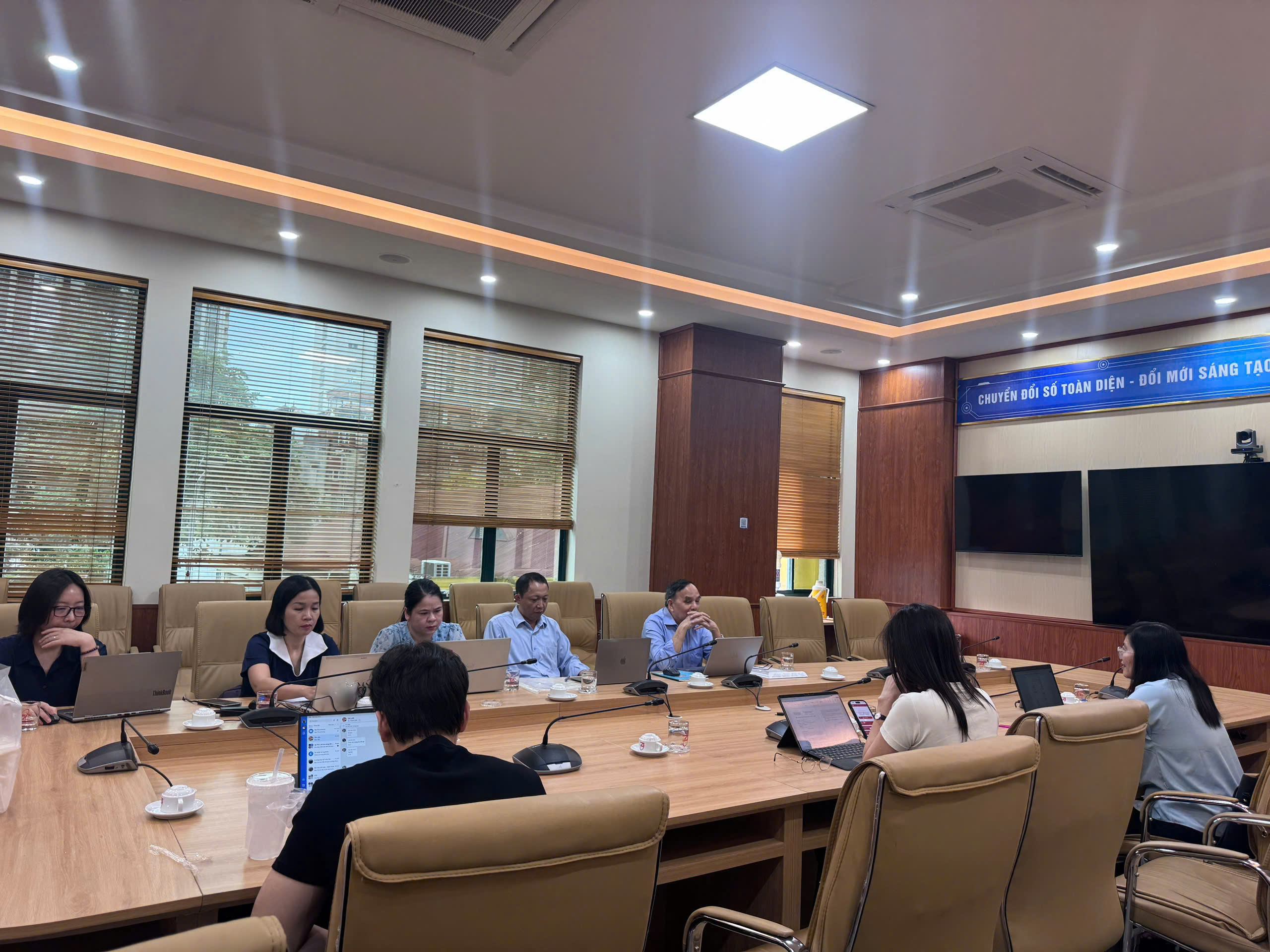
Dr. Le Thi Ngoc Phuong presents on OBE.
In parallel, studying and implementing the Institute’s quality assurance requirements is helping lecturers become more aware of their responsibility for maintaining and improving training quality. Professional activities need to be carried out systematically, supported by appropriate evidence and assessment data, and by mechanisms for gathering feedback from students and other stakeholders.
For the Accounting program, a robust body of evidence plays an important role in demonstrating the connections among training objectives, course content, teaching activities, learning outcomes and the extent to which program standards are met. Collecting, analyzing and using data appropriately will help the department identify what needs adjusting and develop well-founded improvement measures whose effectiveness can be tracked.
In particular, engaging with QAA requirements allows lecturers to become gradually familiar with an international approach to program evaluation. Through professional exchanges and comparison with actual teaching practice, the department can pinpoint areas needing further refinement, review the program’s suitability and prepare the evidence required for subsequent steps on the accreditation roadmap.
The process is not simply about completing paperwork for assessment. It also helps foster a quality assurance culture among lecturers. Each lecturer plays a direct role in implementing learning outcomes, organizing learning activities, assessing results and proposing improvements for the courses they teach.
The ultimate goal of accreditation and quality improvement is to raise training quality and ensure that learners acquire the knowledge, skills and competencies that professional practice demands. For Accounting students, this means the ability to apply specialized knowledge, handle financial information, analyze data, use technological tools and make sound judgments in real-world situations.
When learning outcomes are clearly defined, course content is coherently designed and assessment is transparent, students are better able to take the initiative in their studies, identify the competencies they need to develop and prepare for their future careers.
In addition, more practical exercises, applied assignments, group discussions and business case analyses will help narrow the gap between classroom knowledge and workplace requirements. In the context of digital transformation, the program must also pay attention to students’ ability to use accounting software, extract and analyze data, and recognize issues of accuracy, security and ethics in handling financial information.
Feedback from students, alumni, employers and other stakeholders is an important basis for assessing how well the program matches real-world needs. Such input supports adjustments to training content, innovation in teaching methods and more effective student support.
Alongside its in-house training activities, the Department of Accounting and Auditing will continue to review and update the curriculum, develop lecturers’ professional capacity and strengthen links between training and professional practice. These directions are essential to better meeting labor market demands and laying the groundwork for the program’s sustainable development.
International accreditation demands serious preparation, a long-term commitment and consistent participation from all stakeholders. For the Accounting program, early preparation not only helps lecturers engage proactively with quality requirements but also offers an opportunity to take a more comprehensive look at training effectiveness, the learning experience and how well the program meets society’s needs.
With a proactive, responsible and open-minded spirit, the Department of Accounting and Auditing, Faculty of Finance and Accounting 1, Posts and Telecommunications Institute of Technology, is steadily building the foundation for international accreditation under QAA (UK) standards. Through in-house training, curriculum review and stronger quality assurance practices, the department aims to turn accreditation requirements into genuine drivers of improvement in its teaching.
Preparing proactively from today is not only about meeting future international quality standards. It also reflects the commitment of the Department of Accounting and Auditing and the Faculty of Finance and Accounting 1 to continually improving training quality, developing students’ professional capabilities and helping affirm PTIT’s standing as higher education becomes increasingly integrated globally.